
The Complete Sponge Rack Buying Guide: Keep Your Kitchen Sink Tidy And Dry
Jul 23, 2026
Few things in a kitchen get overlooked as often as the humble sponge. It sits by the sink, absorbs everything, and gets ignored until it starts to smell. A decent sponge rack fixes most of that quietly, and choosing one is far less complicated than the endless product listings make it seem.
This guide walks through the two main types worth considering, the quality details that actually matter, and a few honest picks depending on the kind of kitchen you have.
Why a Good Sponge Rack Matters More Than You Think
A sponge that stays damp is basically a small, warm habitat for bacteria. Leave it flat on the counter and it never fully dries, which is exactly the condition microbes love.
The right sponge holder for sink lifts the sponge off wet surfaces and lets air move around it. That single change does most of the hygiene work for you.
The Hidden Problems of a Wet, Cluttered Sink
Standing water is the villain here. It pools under sponges, leaves mineral rings on countertops, and slowly warps or stains surfaces near the sink edge.
There's also the smell. That sour, musty odor comes from bacteria breaking down food residue trapped in a sponge that never dried out. And a constantly-wet sponge simply wears out faster, so you replace them more often than you should.
What a Sponge Rack Actually Solves
Sponges dry in a fraction of the time thanks to airflow.
The sink zone looks tidier because everything has a spot.
Countertops stay drier and cleaner.
Sponges and brushes last noticeably longer.
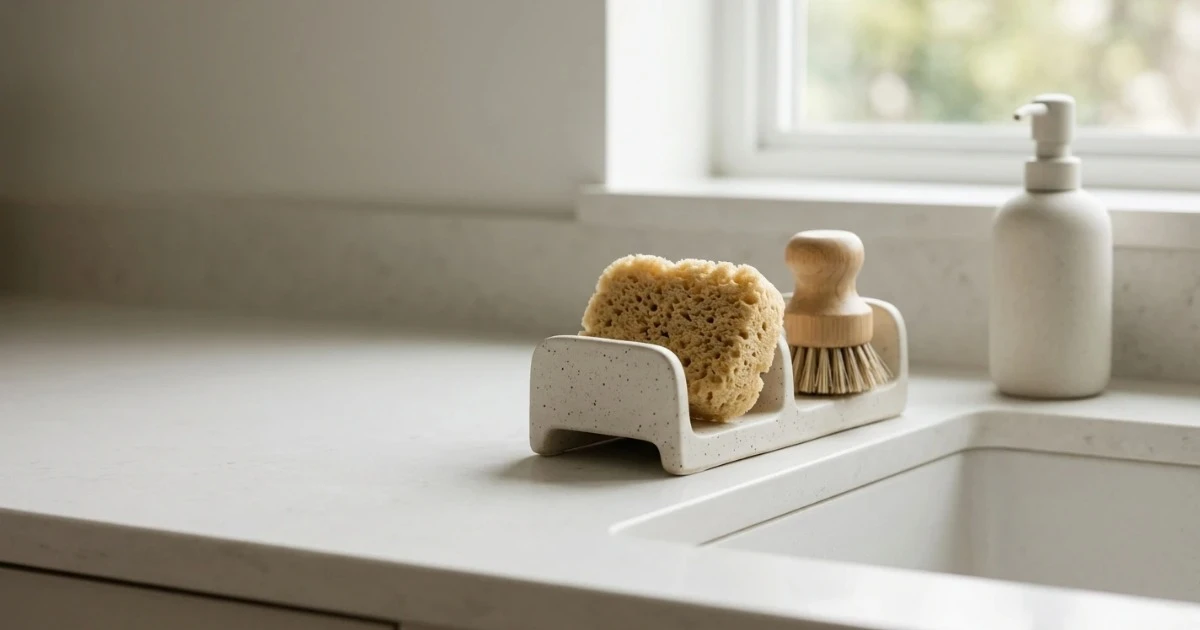
The Two Main Types of Sponge Racks
Almost every product on the market falls into one of two camps: something you mount to a wall, or something that sits freely near the sink. Your kitchen layout usually decides which makes sense.
Wall-Mounted (Adhesive & Drill-In) Sponge Holders
Mounting a rack to the wall or the side of a cabinet keeps the counter clear entirely. This is a smart move for small kitchens where every inch of surface counts, and it doubles nicely as a compact kitchen sponge organizer.
Adhesive-Mount Pros and Cons
The obvious appeal is zero damage. No drilling, no holes, and you can reposition it if you get the placement wrong the first time. That makes adhesive mounts a favorite among renters.
The catch is that they only hold as well as the surface allows. Textured tile, rough grout lines, or a wall that never got wiped clean before mounting can all weaken the bond over time.
Drill-In Mount Pros and Cons
Screwed-in racks don't budge. They handle heavier loads without complaint and stay put for years, which suits a permanent kitchen setup.
The trade-off is commitment: you're putting holes in your wall or cabinet, so it's best reserved for a spot you're confident about.
Countertop & Sink-Edge Sponge Caddies
If you'd rather not mount anything, a freestanding caddy is the flexible choice. You can slide it wherever it's convenient and move it when you clean. This is where countertop sponge storage really shines for people who like to rearrange their space.
Sink Caddy With Drainage
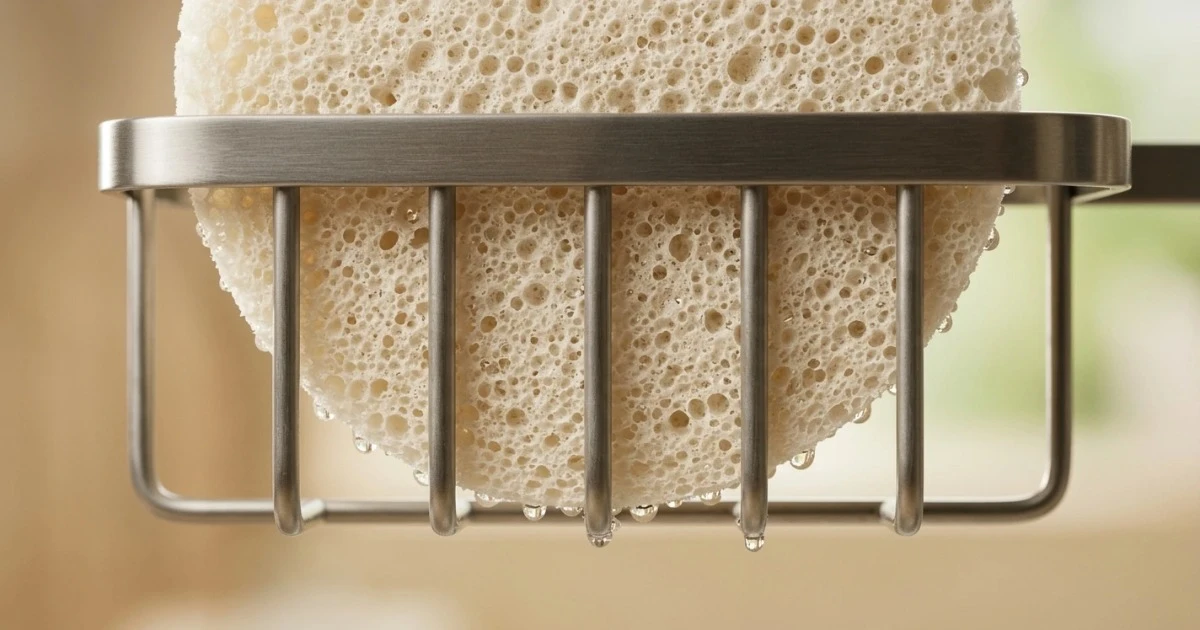
The best freestanding models include a drip tray or slotted base. A sink caddy with drainage channels water away instead of letting it collect underneath, which is the whole point.
Without that feature, you just recreate the wet-counter problem in a nicer-looking package.
Over-the-Sink & Basket-Style Dish Sponge Caddy
Some designs bridge the sink or clip over the divider, holding sponges, scrub brushes, and a bar of soap all together. A well-built dish sponge caddy in this style keeps your cleaning kit in one grabbable spot and drains straight into the basin.
What to Look For When Buying (The Quality Checklist)
Ignore the marketing photos for a minute. These are the practical details that separate a rack you'll still use in three years from one you'll toss in three months.
Material: Why 304 Stainless Steel Wins
Cheap plastic yellows and cracks near hot water, and low-grade metal rusts the first time water sits on it. SUS304 stainless steel resists corrosion because of its chromium and nickel content, which is why it's the standard for anything living in a wet environment.
Powder-coated carbon steel is a reasonable alternative when the coating is done properly, offering a matte finish and solid rust protection as long as the coating stays intact.
Drainage Design
Look for slotted bases, open wireframes, or a removable drip tray. The goal is airflow underneath and an easy path for water to leave. A solid flat bottom with no drainage traps moisture and defeats the purpose.
Mounting Strength & Stability
For adhesive models, check what kind of tape or mounting pad is used and its rated load. For screw-in racks, look at the fittings and anchors included. And for countertop caddies, a low center of gravity and some weight keep them from tipping when you reach for a sponge.
Size, Capacity & Fit
Measure before you buy. A caddy that's too wide won't sit on a narrow sink edge, and one that's too small won't hold your usual mix of sponge, brush, and soap. Think about how many items you actually keep by the sink day to day.
Safety & Food-Contact Standards
Since these racks live where you rinse dishes and food, a food-contact certification is a genuine signal of quality. It means the material has been tested for what it can safely touch, which is reassuring even for something that mostly holds a sponge.
Our Top Picks by Kitchen Type
Rather than one "best" rack, here's what tends to work for different situations.
Best for Small Kitchens & Renters
Go with an adhesive wall-mounted stainless steel holder. It clears the counter, leaves no permanent marks, and the stainless build won't rust from constant splashing. Ideal when space is tight and you can't drill.
Best for Busy Family Kitchens
A larger-capacity countertop sink caddy with a drainage tray handles the volume of a household that cooks often. There's room for multiple sponges and scrubbers, and the tray keeps the surrounding counter dry.
Best All-in-One Organizer
A combination caddy that holds sponges, brushes, and soap together is the tidiest single solution. Everything drains into the sink and stays in reach, which cuts down on the scattered clutter most sinks accumulate.
Care Tips to Make Your Sponge Rack Last
Rinse the rack whenever you notice buildup, and give it a proper clean every week or two with warm soapy water. If you have a stainless model, an occasional wipe with vinegar removes any hard-water spots.
Most importantly, let the rack air-dry rather than trapping moisture, and empty the drip tray so it doesn't sit full. That routine takes seconds and keeps things fresh.
Sourcing or Selling Sponge Racks? Work With a Trusted Factory
If you're a retailer, wholesaler, or home brand rather than a shopper, the questions change. You care about consistency, certifications, and whether a factory can actually deliver on time.
ATACAMA Innovations Co., Ltd. is a kitchen and bathroom storage hardware manufacturer based in Huizhou, Guangdong, China. The focus is stainless steel dish racks, drainboards, and sink organizers, produced in-house from start to finish.
Why ATACAMA Innovations Stands Out
Stamping, welding, surface treatment, and assembly all happen under one roof, which keeps quality consistent and lead times shorter. Products are made from SUS304 stainless meeting national-standard specifications, with powder-coated carbon steel offered as an alternative finish.
On testing: the products meet food-contact certification requirements and pass the Japanese silk-scarf rust test - a method where a treated cloth is used to detect surface corrosion that ordinary inspection might miss. Alongside that, the factory offers mature structural design, fast prototyping, and competitive pricing.
OEM/ODM Customization
For clients who want their own product, ATACAMA supports OEM and ODM work: structural design, private labeling, and custom packaging. That flexibility suits cross-border e-commerce sellers, wholesalers, and home brands exporting to Europe, the US, and Japan.
If you're looking to source or sell sponge racks and related sink storage, it's worth reaching out to discuss samples and specifications directly.
Frequently Asked Questions
Q: Are Adhesive Sponge Holders Strong Enough To Stay Up?
A: Yes, when the surface is smooth, clean, and dry before you apply them, and the adhesive is a quality mounting pad. Wipe the wall down first and let the mount cure for a day before loading it. On rough tile or greasy surfaces, results are less reliable.
Q: Is Stainless Steel Really Better Than Plastic?
A: For anything sitting in a wet zone, generally yes. SUS304 stainless resists rust and doesn't degrade near hot water the way cheaper plastics do. Plastic can work short-term, but it tends to discolor and become brittle over time.
Q: How Do I Stop My Sponge From Smelling?
A: Let it dry fully between uses - a rack with good airflow is the biggest help. Rinse it thoroughly after each use, wring it out well, and replace it every few weeks. A soaking-wet sponge left flat is what causes odor in the first place.
Q: Can A Sponge Rack Fit Any Sink?
A: Not automatically, so measure first. Over-the-sink and sink-edge caddies depend on your basin width and the thickness of the edge. Wall-mounted and freestanding countertop options are more forgiving since they don't rely on the sink's dimensions.
Q: Where Can I Buy Quality Sponge Racks In Bulk?
A: For bulk or wholesale orders, working directly with a manufacturer usually gives you better pricing and customization than a middleman. ATACAMA Innovations produces stainless steel sink storage in Guangdong and handles OEM/ODM requests, so it's a practical starting point for retailers and brands.