

I've worked in the metal manufacturing industry for over 15 years. The question I get asked most often is simple: Does stainless steel rust?
The answer surprises most people. Let me walk you through what actually happens, why it happens, and how you can protect your investment.
The Short Answer - Yes, Stainless Steel Can Rust
Here's the truth that most marketing brochures won't tell you: "stainless" doesn't mean "stain-proof." It means "stains less." That distinction matters enormously when you're spending money on appliances, fixtures, or outdoor furniture.
Why Most People Believe Stainless Steel Is Invincible
I don't blame consumers for this misconception. The name itself is misleading, and decades of advertising have reinforced the idea that stainless steel is completely immune to rust. In reality, it's a rust-resistant metal - not a rust-proof one.
The gap between marketing language and metallurgical reality is where most buyer frustration lives. Understanding that gap will save you money and headaches.
What Actually Makes Stainless Steel "Stainless"
The magic ingredient is chromium. When steel contains at least 10.5% chromium, something remarkable happens: the chromium reacts with oxygen in the air to form an ultra-thin, invisible chromium oxide layer on the surface.
This passive film is what prevents metal oxidation from reaching the iron underneath. Even more impressive - when you scratch the surface, this protective layer actually self-repairs within hours, as long as oxygen is available.
Think of it as a self-healing shield. But like any shield, it has limits.
How Stainless Steel Corrosion Actually Happens
When that protective chromium oxide layer gets overwhelmed or can't regenerate, the iron in the steel gets exposed. That's when stainless steel corrosion begins - and it follows predictable patterns I've seen hundreds of times.
The 5 Most Common Causes of Stainless Steel Rust
1. Chloride Exposure (Salt, Pool Chemicals, Coastal Air)
Chlorides are the number-one enemy. Salt spray, pool chemicals, and even road de-icing salts attack the passive film aggressively. I've seen brand-new railings develop rust within months in coastal environments when the wrong grade was selected.
2. Surface Contamination from Carbon Steel Tools
During manufacturing or installation, if carbon steel tools touch stainless steel, they leave microscopic iron particles on the surface. These particles rust quickly and make it look like the stainless steel itself is corroding.
3. Damage to the Chromium Oxide Layer
Deep scratches, aggressive abrasives, or harsh chemicals containing bleach can strip away the protective layer faster than it can repair itself.
4. Choosing the Wrong Grade for the Environment
This is the mistake I see most often. Using an indoor-grade product in a harsh outdoor environment is like wearing sneakers to climb a mountain - technically footwear, but completely wrong for the job.
5. Poor Maintenance and Trapped Moisture
Standing water, poor drainage, and debris buildup create oxygen-depleted zones where the chromium oxide layer cannot regenerate. Pitting corrosion in stainless steel almost always begins in these trapped-moisture areas.
Pitting Corrosion vs. Surface Rust - What's the Difference?
Surface rust appears as reddish-brown discoloration on the metal. It's usually cosmetic and removable. Pitting corrosion is far more serious - it creates small, deep holes that penetrate the metal's interior.
I always tell my clients: surface rust is a warning sign, pitting corrosion is structural damage. If you see small dark pits forming, that's when professional intervention becomes necessary.
Stainless Steel Grades Compared - Not All Are Created Equal
This is where the real buying power lives. Understanding grades is the single most valuable thing I can teach you. Here's a practical breakdown of what's available on the market.
Grade Comparison Table
| Grade | Chromium % | Nickel % | Corrosion Resistance | Best For | |
|---|---|---|---|---|---|
| 201 | 16-18% | 3.5-5.5% | Low-Moderate | Budget indoor items | |
| 304 | 18-20% | 8-10.5% | Good | Kitchen, general use | |
| 316 | 16-18% | 10-14% | Excellent | Marine, coastal, medical | |
| 430 | 16-18% | 0% | Moderate | Decorative, indoor | |
| 2205 Duplex | 22-23% | 4.5-6.5% | Superior | Industrial, harsh chemical |
Which Grade Should You Actually Buy?
Kitchen appliances and cookware: 304 grade is your sweet spot. It handles food acids, regular cleaning, and humidity well. Most reputable cookware brands use 304 (often labeled 18/10 or 18/8).
Outdoor furniture and fixtures: Go 316 if you can budget it, especially if you live within 10 miles of the coast. For dry inland climates, 304 works fine outdoors.
Bathroom and wet-area hardware: 304 minimum. Avoid 201 or 430 in bathrooms - the constant moisture exposure will eventually cause problems.
Preventing Metal Oxidation - My Proven Maintenance Guide
Daily and Weekly Care Routine
Use mild soap and warm water for daily cleaning. For weekly deeper care, a mixture of vinegar and water works beautifully on most stainless surfaces. Always wipe in the direction of the grain - going against it can trap particles in the microscopic grooves.
Avoid chlorine-based cleaners, steel wool, and abrasive powders. These damage the chromium oxide layer and accelerate stainless steel corrosion.
Environmental Protection Strategies
Ensure proper drainage around stainless steel installations - standing water is the enemy. Use rubber or plastic washers to separate stainless from dissimilar metals like aluminum or carbon steel, which prevents galvanic corrosion.
In enclosed areas, maintain good ventilation. Trapped humid air creates the oxygen-depleted conditions where pitting corrosion thrives.
When Rust Appears - Removal Methods That Work
| Method | Best For | Difficulty | Cost |
|---|---|---|---|
| Baking soda paste | Light surface rust | Easy | Very Low |
| Bar Keeper's Friend | Moderate staining | Easy | Low |
| Oxalic acid solution | Stubborn rust spots | Moderate | Low |
| Professional passivation | Pitting corrosion | Expert needed | Moderate-High |
How to Spot Quality Stainless Steel Before You Buy
3 Quick Tests You Can Do in the Store
The magnet test: A magnet will stick weakly or not at all to 304 and 316 grades (austenitic). It sticks firmly to 430 (ferritic). This isn't a quality test - it's a grade identifier. Both types have legitimate uses.
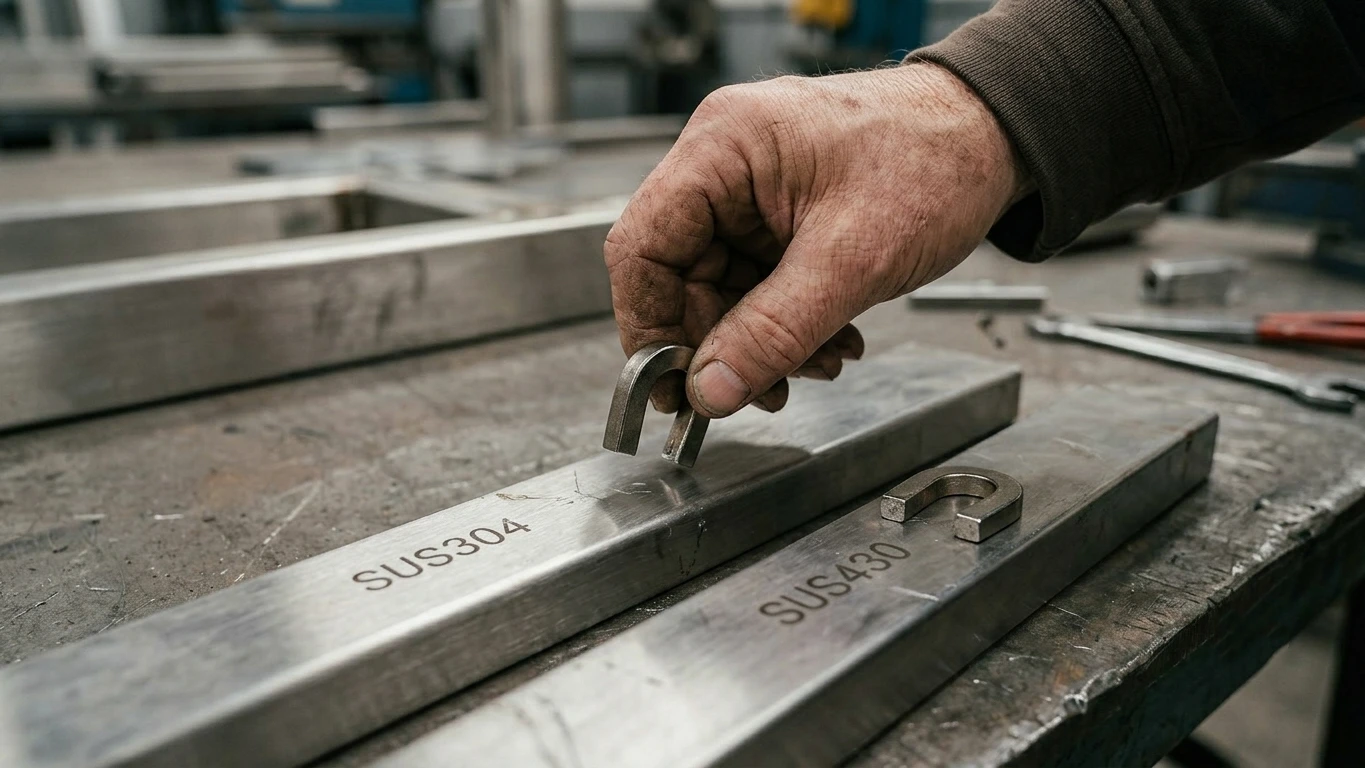
Weight and finish inspection: Quality stainless steel feels substantial. If a product seems surprisingly light for its size, the gauge (thickness) may be too thin for durability.
Grade stamps and certifications: Look for clear markings like "SUS304," "18/10," or "AISI 316." Reputable manufacturers proudly stamp their grades.
Red Flags That Signal Low-Quality Stainless Steel
Be wary of vague labels like "stainless steel type" without specifying a grade number. Unusually low pricing for the product category often means lower-grade material or thinner gauge construction.
If a manufacturer cannot provide material specifications or test certificates upon request, that's a significant warning sign. Quality producers document everything.
The Bottom Line - From Someone Who Works With This Metal Every Day
Stainless steel remains one of the best rust-resistant metals available to consumers. It's durable, attractive, and low-maintenance when you choose correctly. The key is matching the grade to your environment.
My simple rule after 15 years: spend the extra 20-30% on the right grade upfront, and you'll never spend on replacements. For most homes, 304 handles everything beautifully.
Stainless steel doesn't have to rust. It just needs you to make one informed decision at the point of purchase - and now you have everything you need to make that decision confidently.
Frequently Asked Questions
Q:Does stainless steel rust in water?
A: It depends on the water type. Clean tap water poses minimal risk to 304 and 316 grades. Saltwater will corrode even 304 over time - only 316 or higher offers reliable protection. Standing water of any type is problematic because it creates oxygen-deprived zones where the protective layer cannot regenerate.
Q:Can rusted stainless steel be repaired or is it ruined?
A: Surface rust is almost always repairable with simple cleaning methods. The chromium oxide layer will reform once contaminants are removed. However, deep pitting corrosion may require professional passivation treatment, and in severe cases, replacement is the safer option for structural applications.
Q:Does stainless steel rust faster when scratched?
A: Light scratches are not a concern - the chromium oxide layer self-repairs within hours when exposed to oxygen. Deep gouges that expose bare metal are more vulnerable temporarily, but even these typically heal. The exception is in chloride-rich environments, where scratches can become initiation points for pitting corrosion.
Q:How long does stainless steel last without rusting?
A: With proper grade selection and basic maintenance: 304 grade lasts 15-25 years in mild environments, 316 grade can exceed 30+ years even in moderately harsh conditions. In controlled indoor environments, quality stainless steel can last a lifetime without any corrosion.
Q:Is magnetic stainless steel lower quality?
A: Not necessarily. The magnet myth confuses many buyers. Ferritic grades (like 430) are magnetic and perfectly suitable for indoor decorative use. Austenitic grades (304, 316) are mostly non-magnetic and offer better corrosion resistance. Magnetism indicates grade type, not quality.
